1. What does the business do? 🏗️
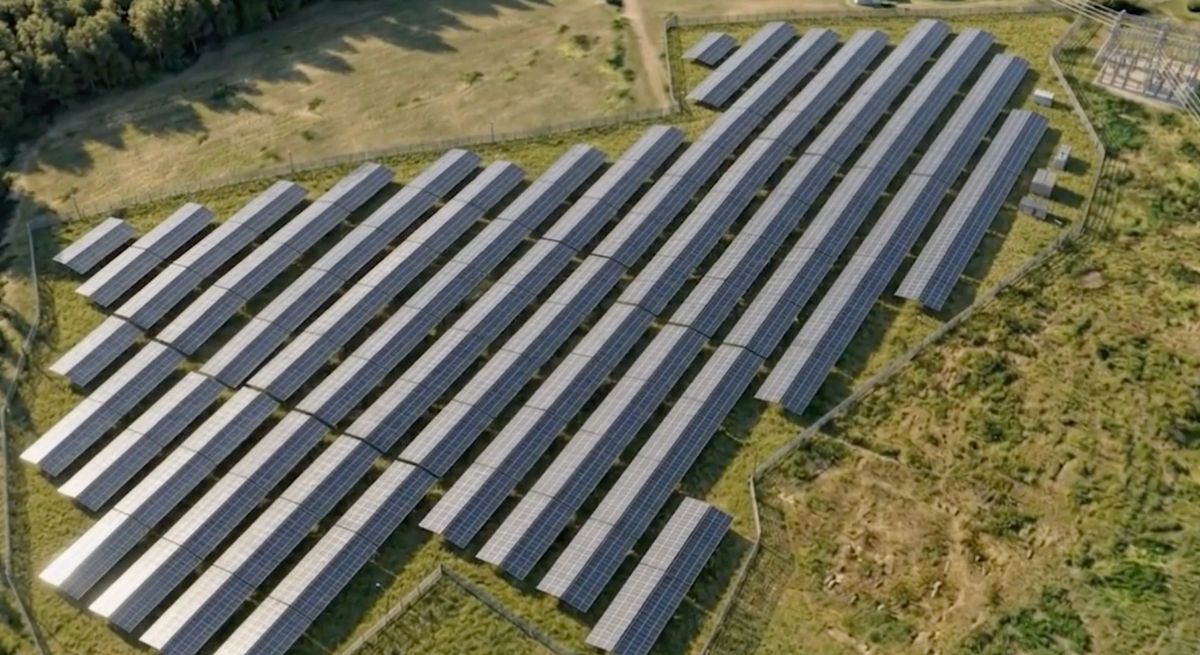
Codex Energy positions itself as an energy company focused on building and managing renewable energy facilities.
The company’s main project is “Bolhrad Energy Park” in the Odesa region of Ukraine.
The business model is quite simple: the company plans to generate electricity through a solar power plant, store electricity in batteries, and sell it when electricity prices are higher.
The project includes:
✅ a 3.3 MW solar power plant;
✅ a 3 MW / 10 MWh battery energy storage system;
✅ potentially, an EV charging hub.
In simple terms, the investor is not investing in an abstract financial scheme, but in an energy infrastructure asset: a solar power plant, battery storage, and supporting infrastructure.
2. Investment product 💼
Investors are offered participation in an energy project that is expected to generate income from the production, storage, and sale of electricity.
The main declared project parameters are:
📍 Location: Bolhrad, Odesa region.
⚡ Solar power plant capacity: 3.3 MW.
🔋 Battery storage capacity: 3 MW / 10 MWh.
💰 Total project budget: approximately €4.5 million.
👥 Planned amount to be raised from private investors: around €3 million.
💵 Minimum investment threshold: from €20,000.
📈 Projected return: 16–20% per year.
🏁 Estimated launch: end of 2026 / Q4 2026.
This means the project is not aimed at small retail investors, but rather at investors who are ready to invest a relatively significant amount and accept the risks of a business investment.
3. Who is behind the project? 👥
In public materials, the co-founders of Codex Energy are named as:
Artur Lupashko — founder of Ribas Hotels Group.
Oleksandr Hanchev — co-founder of Codex Energy, presented as a specialist with experience in energy project development.
The legal entity connected to the project is СТ “ЕК ЕНЕРГОПАРК БОЛГРАД”.
Public registry data indicates the following:
🔢 Company code: 45924892.
📅 Registration date: July 11, 2025.
👤 Director: Oleksandr Ivanovych Hanchev.
📌 Main business activity: 35.14 — trade of electricity.
📍 Address: 21 Varnenska Street, Odesa.
💰 Charter capital: UAH 0.
⚠️ Important: charter capital of UAH 0 does not automatically mean there is a problem or fraud. However, it is an important signal for an investor. Investor protection should be clearly described not through charter capital, but through the agreement, asset rights, repayment procedure, insurance, and legal structure.
According to available financial data for 2025, the following figures are also indicated:
🔸 net profit: UAH -744,200;
🔸 assets: UAH 3,202,500.
This may be normal for a project at the launch stage, but it shows that the company does not yet have a long public history of profitable operations.
4. How will investors’ funds be used? 💸
The declared logic for using investor funds looks as follows:
🔹 construction of the solar power plant;
🔹 purchase and installation of the battery energy storage system;
🔹 installation of the transformer substation;
🔹 connection to the electricity grid;
🔹 engineering, legal, and permitting work;
🔹 commissioning of the facility;
🔹 further management of the energy asset.
The total project budget is approximately €4.5 million.
Of this amount, around €1.5 million is declared as the founders’ own and credit funds, while around €3 million is planned to be raised from private investors.
For an investor, it is important to receive a detailed cost breakdown: how much money will go to equipment, construction, grid connection, legal services, commissions, management, and reserves.
5. How are returns expected to be paid to investors? 📈
The declared return is 16–20% per year in foreign currency.
Possible sources of income include:
✅ sale of electricity generated by the solar power plant;
✅ income from price differences: storing electricity during cheaper hours and selling it during more expensive hours;
✅ potential income from an EV charging hub, if it is implemented.
⚠️ Important: the 16–20% annual return appears to be projected, not a guaranteed bank-like rate. Actual income will depend on the plant’s performance, electricity prices, market rules, maintenance costs, equipment condition, and wartime risks.
6. Income guarantee 🛡️
Based on publicly available sources, the existence of a strict financial guarantee has not been confirmed — meaning a guarantee under which the company is legally obliged to pay investors 16–20% annually regardless of the project’s actual results.
What is presented as protection or guarantee elements appears to be more related to:
🔸 the founders’ own financial participation;
🔸 the presence of a physical asset — the solar power plant and battery storage;
🔸 technical protection of key equipment;
🔸 project management by the Codex Energy team.
📌 For an investor, it is critical to check the agreement and understand what the return actually is:
✅ a fixed obligation of the company;
or
⚠️ a share of the project’s actual profit.
This is a very important difference.
If the return is a fixed obligation, the company must pay regardless of the result. If it is a share of profit, the investor receives money only when the project actually generates profit.
7. Legal support and agreement 📄
The full package of agreements signed by investors is not specified in public materials.
Based on the available information, the model may be connected to participation in an energy cooperative or an enterprise that manages the asset.
The relationship with the investor may be regulated by documents such as:
📌 an agreement on joining or participating in the cooperative;
📌 an agreement for the purchase of corporate or property rights;
📌 an investment agreement;
📌 the cooperative’s charter;
📌 internal rules for profit distribution.
Before signing any documents, the investor should obtain:
✅ the charter of СТ “ЕК ЕНЕРГОПАРК БОЛГРАД”;
✅ the investor agreement;
✅ the project’s financial model;
✅ land documents;
✅ technical conditions for grid connection;
✅ permitting documentation;
✅ licenses or agreements required for selling electricity;
✅ the procedure for investor exit from the project;
✅ the procedure for repayment of the investment principal;
✅ the procedure in case the asset is damaged or destroyed.
⚠️ Without these documents, the investor cannot properly assess the legal protection of their funds.
8. Minimum investment term ⏳
A clear minimum investment term is not specified in public materials.
This is an important point that must be clarified before signing the agreement.
The investor should receive written answers to the following questions:
❓ What is the actual investment period?
❓ Is early exit from the project possible?
❓ Is there a penalty for early exit?
❓ When do payments begin?
❓ Does the investment term depend on the launch of the facility?
❓ What happens if the launch is postponed?
If the minimum term is not clearly written in the agreement, the investor may face a situation where the funds are formally invested, but cannot be quickly returned.
9. How will the investment principal be returned? 🔁
A clear mechanism for returning the investment principal is not specified in public materials.
This is one of the main risk points for an investor.
Before investing, the investor should clarify in writing:
❓ Is there a fixed period for buying back the investor’s share?
❓ Who exactly is obliged to buy back the investor’s share?
❓ What formula is used to calculate the exit price?
❓ Can the share be sold to another investor?
❓ What happens if the project is not launched on time?
❓ What happens if the asset is damaged due to war?
❓ Is the investment principal returned in full?
❓ Are there penalties or commissions for early exit?
Without clear answers, this investment looks more like long-term participation in a business than a deposit with guaranteed repayment.
10. Asset protection and restoration of ownership 🏗️
The company states that key equipment will have technical protection, including the battery energy storage system and transformer substation.
However, for an investor, physical protection is not the only important issue. The legal ownership structure is also critical.
The following points should be checked:
⚠️ who owns the equipment;
⚠️ whether the investor has a direct ownership share;
⚠️ whether the facility is insured against war-related risks;
⚠️ if the equipment is destroyed or damaged, who restores the asset and how;
⚠️ whether compensation for the investor is provided;
⚠️ whether the investor has rights to part of the equipment or only the right to income.
Sufficient details about insurance and the procedure for asset restoration after damage are not specified in public sources.
This is important because, under wartime conditions, a physical asset may be damaged, and income may stop fully or partially.
11. Key locations 📍
The main declared project location is Bolhrad, Odesa region.
This location is logical for solar generation because southern Ukraine generally has higher solar activity compared with many other regions.
At the same time, the Odesa region also carries risks:
⚠️ wartime risks;
⚠️ risk of damage to energy infrastructure;
⚠️ risk of generation or electricity transmission restrictions;
⚠️ risk of delays with grid connection.
So the location may be attractive from a solar generation perspective, but it is not risk-free.
12. Market outlook and realism of the projected return 📊
Ukraine truly needs new electricity generation and energy storage systems. Because of attacks on energy infrastructure, demand is growing for decentralized generation, solar power plants, and batteries.
The solar power plant + BESS model makes sense:
✅ solar energy can generate relatively cheap electricity;
✅ batteries allow electricity to be stored;
✅ electricity can be sold when the price is higher;
✅ such a facility can help the energy system during periods of shortage.
However, the declared 16–20% annual return in foreign currency is high.
For this level of profitability to be realistic, the following must be clearly confirmed:
📌 the financial model;
📌 electricity price forecasts;
📌 downside scenarios;
📌 battery maintenance costs;
📌 equipment lifespan;
📌 cost of battery replacement;
📌 downtime risks;
📌 imbalance risks in the electricity market;
📌 taxes and commissions;
📌 management costs.
If these details are not disclosed, the investor cannot properly evaluate how achievable the declared return really is.
13. Reviews and criticism of the project 🕵️♂️
Promotional materials, partner publications, social media activity, and mentions of Codex Energy are available publicly.
At the same time, a sufficient number of independent investor reviews confirming that investors have already received payments specifically from Codex Energy was not found.
A long public track record of the project operating as a profitable investment asset also has not been confirmed.
This matters because a potential investor currently does not see enough independent evidence that:
✅ the facility is already operating;
✅ investors are already receiving payments;
✅ the declared return is actually being achieved;
✅ the investment principal has already been returned to investors;
✅ the exit mechanism works in practice.
14. Main criticism from the perspective of potential loss of funds ⚠️
1. The project is still young
The legal entity СТ “ЕК ЕНЕРГОПАРК БОЛГРАД” was registered in 2025. This means there is no long history of operations, profits, or regular payments to investors.
2. No confirmed history of profitability
According to available financial data for 2025, a loss of UAH -744,200 is indicated. This may be normal for an early-stage project, but investors should understand that a proven profitable history is not yet available.
3. Charter capital of UAH 0
Charter capital of UAH 0 does not automatically mean fraud. However, it means the investor should pay special attention to the agreement, asset rights, collateral, insurance, and repayment procedure.
4. Wartime risk
The Odesa region remains exposed to wartime risks. If the facility is damaged by a missile or drone, generation may stop, and the return may disappear or decrease significantly.
5. Regulatory risk
The electricity market has complex rules. Changes in tariffs, balancing rules, grid access, or electricity sale conditions may affect the project’s economics.
6. Electricity price risk
The battery model works well when there is a meaningful difference between cheap and expensive hours. If this difference decreases, the battery may earn less than projected.
7. Liquidity risk
A simple and guaranteed investor exit mechanism is not publicly specified. It may be difficult to sell the share, or it may only be possible at a discount.
8. Launch delay risk
If construction, grid connection, permitting procedures, or equipment procurement are delayed, payments to investors may begin later than expected.
9. Transparency risk
The full document package, investor rights structure, principal repayment mechanism, and exit terms are not publicly disclosed. These must be checked before transferring funds.
15. Investor conclusion 🧠
Codex Energy looks like a real infrastructure project in a promising sector, not just an abstract financial offer. There are public mentions, known co-founders, a registered legal entity, a declared location, and a clear technical concept.
However, from an investor’s perspective, this is a risky business investment, not passive guaranteed income.
The positive sides of the project are:
✅ the energy sector is promising;
✅ the product is understandable — a solar power plant plus battery storage;
✅ the location is logical for solar generation;
✅ public information is available about the initiators and the legal entity.
The main risks are:
⚠️ the 16–20% return is high and must be checked through the financial model;
⚠️ income guarantees do not appear sufficiently clear publicly;
⚠️ the mechanism for returning the investment principal is not described transparently enough;
⚠️ there is no long history of payments to investors;
⚠️ there are wartime, technical, regulatory, and market risks.
📌 This project should not be viewed as a “safe investment.” It may be interesting only for an investor who is ready to accept risk, understands the energy market, and checks all documents with an independent lawyer before investing.
16. What must be clarified before investing? ✅
Before investing, written answers should be obtained to the following questions:
❓ What exact agreement does the investor sign?
❓ Does the investor receive a share in the legal entity or only the right to income?
❓ What is the minimum investment term?
❓ How is the investment principal returned?
❓ Is there a guaranteed buyback of the investor’s share?
❓ Who exactly is responsible for returning the funds?
❓ Is the facility insured against war-related risks?
❓ Who owns the land and equipment?
❓ Are there technical conditions for grid connection?
❓ Are there already signed agreements for selling electricity?
❓ What does the financial model show under a pessimistic scenario?
❓ What happens if the return is not 16–20%, but 5–8%?
❓ What happens if the project becomes loss-making?
❓ How can the investor exit the project?
❓ Are there penalties or commissions for early exit?
17. Project contacts ☎️
Public sources for Codex Energy indicate:
📞 +38 (068) 606-02-08
🌐 Website: codex.energy
The Ribas Hotels Group publication about this project also lists the following contacts for consultation:
📞 +38 (097) 842-08-34
📧 hello@ribashotels.com
📍 Odesa: 25 Lesi Ukrainky Avenue
📍 Kyiv: 12 Buslivska Street
📍 Lviv: 4 Ferentsa Lista Street