BYD – The World’s New EV Leader
BYD, once a humble Chinese battery maker, has become the world’s top EV manufacturer. In 2024, BYD overtook Tesla in global battery electric vehicle (BEV) sales. In Europe alone, BYD sold more EVs than Tesla in April 2025, marking a historic shift. The company is also gaining traction in Ukraine — in early 2025, BYD became the top-selling new electric car brand in the country, with a 28% market share.
Why Are BYD EVs So Cheap?
There are three main reasons:
🔋 Massive government subsidies – Between 2016 and 2022, the Chinese government injected over $57 billion in EV subsidies. Even after national subsidies ended, regional support (like tax breaks) continues, allowing BYD to sell cars 20% cheaper than European competitors.
🏭 Full control of the supply chain – BYD makes its own batteries (Blade Battery using LFP tech), electronic components, and motors. This vertical integration cuts production costs by 20% compared to Western automakers.
⚔️ Price war and scale – China’s EV market is in a constant price war. BYD has slashed prices multiple times to compete with Tesla, NIO, and Xpeng. Thanks to its massive factories and lower labor costs, BYD can afford aggressive pricing.
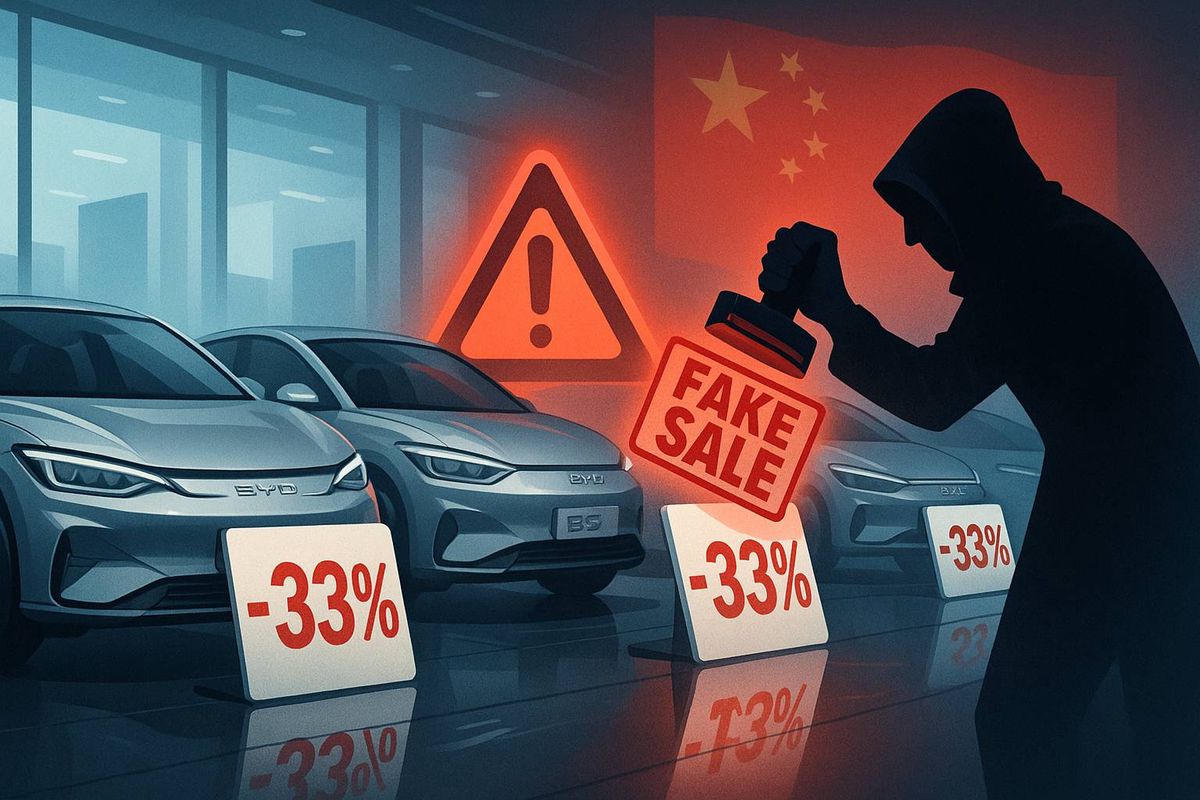
The “Zero-Mileage Used Car” Trick
But there’s more. One of the darker schemes is the so-called “zero-mileage secondhand vehicle” system.
🚗 Here’s how it works:
BYD “sells” new EVs to affiliated dealers or leasing companies.
These cars are registered as sold, unlocking government subsidies.
The cars never get driven and sit idle in storage.
Months later, they’re sold as “used” EVs — at steep discounts — but with zero mileage and full warranty.
This boosts BYD’s sales figures, triggers subsidy payouts, and floods the used market with “new-used” EVs.
⚠️ In early 2025, China’s Ministry of Commerce summoned BYD and other EV makers to explain the suspiciously high volume of “used” cars with zero mileage. Even the CEO of Great Wall Motors called this practice a “Ponzi-like bubble,” comparing it to the Evergrande property collapse.
Some estimates show up to 90% of used EV exports from China in 2024 were essentially brand-new cars disguised as used ones — severely distorting market statistics and prices.
Consumer Dangers
💥 Ultra-cheap EVs might mean corners were cut in production — safety, battery testing, material quality. If a car was built just to qualify for subsidies, it wasn’t meant to hit the streets.
🛠️ In China, there are no strong consumer protection laws like “lemon laws” in the US. Once you buy a BYD, it’s yours — problems and all.
🧾 If you buy a BYD EV listed as used with zero mileage, you may not get full warranty coverage, even though the car is functionally brand new.
Investor Red Flags
📉 If BYD’s massive growth is built on fake sales and subsidy games, its revenue and market cap might be inflated. International investors could be misled about real consumer demand.
🇪🇺 Europe has already responded: in July 2024, the EU imposed a 17.4% tariff on BYD EV imports after confirming they were heavily subsidized.
🤯 BYD may be setting up the next “too big to fail” crash — just like Evergrande — but in the EV industry.
Ukraine Outlook
🔌 BYD’s rise in Ukraine could mean more affordable EVs, faster electrification, and job creation if the brand opens local facilities.
🚨 But the risks are real: an oversupply of “zero-mileage” used cars could depress the market, create unfair competition, and harm local distributors or secondhand dealers.
💸 Ukrainian investors interested in the EV sector must dig deeper into real BYD financials and question reported sales volumes.